The Department of Histopathology at the National Institute of Cancer Research & Hospital (NICRH) is a specialized unit dedicated to the comprehensive study of tissue pathology, particularly in cancer diagnostics. Since its establishment on 16th January 1989, the department has played a pivotal role in providing accurate diagnostic services, aiding clinical decision-making, and supporting cancer research and education in Bangladesh.
The department provides expert diagnostic interpretation of biopsies, excision specimens, and intraoperative consultations, contributing significantly to cancer diagnosis, treatment planning, and prognosis determination. Its highly skilled team is committed to maintaining international standards through continuous innovation, quality assurance, and academic excellence.
The department offers a wide range of diagnostic and specialized services, ensuring comprehensive cancer diagnosis and management:
Histopathology Reporting – Evaluation of all types of biopsies and excision specimens.
Immunohistochemistry (IHC) – Testing for over 40 molecular markers, including ER, PR, HER2, Ki67, P53, CK7, CK20, and more.
Frozen Section / Intraoperative Consultation – Rapid diagnosis during surgery.
Imprint Cytology and Review of Reports – Second opinions and confirmatory evaluations.
Work Process:
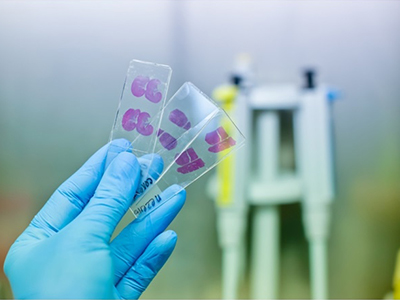
Specimens are received, labeled, grossed, processed, embedded, sectioned, stained, and mounted before being microscopically examined by pathologists. Reports are transcribed, verified, and signed out following strict quality control measures.
Facilities & Equipment:
Automated IHC Stainer (DAKO-OMNIS)
Cryostat Microtome (Frozen Section Machine)
Automated Tissue Processor and Tissue Strainer
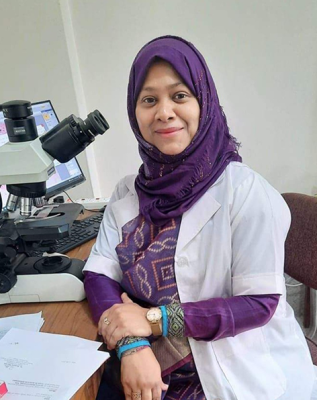
Multihead Microscope
Embedding Center and DAIHAN Scientific Incubator and Oven
Annual Activities (January–December 2024):
Histopathology Cases: 4,920
Immunohistochemistry: 741
Frozen Sections: 189
Reviews: 223
Academic Cytopathology: 6
Mission
The primary mission of the Histopathology Department is to ensure accurate diagnosis of diseases at the tissue and cellular levels—particularly cancers and genetic disorders—through modern technology and scientific analysis.
This department strives for excellence in three key areas: clinical service, research, and education. Alongside conventional pathological techniques, it employs molecular testing, genetic analysis, and next-generation sequencing (NGS).
Objectives
-
Accurate and Reliable Diagnosis:
Provide precise diagnoses of cancer and other tissue-related diseases using advanced histopathological and molecular techniques.
-
Development of Molecular Testing and Genetic Analysis:
Identify genetic mutations, gene expression patterns, and biomolecular markers from tissue samples to develop diagnostic and therapeutic guidelines.
-
Expansion of Fluorescence In Situ Hybridization (FISH) Testing:
Enhance diagnostic capacity for cancers and genetic diseases by detecting specific chromosomal abnormalities or gene rearrangements.
-
PCR-Based Testing (Polymerase Chain Reaction):
Facilitate rapid and specific detection of particular gene segments to support disease diagnosis.
-
Application of Next-Generation Sequencing (NGS):
Utilize high-throughput sequencing technologies to detect gene mutations and variations in cancers and other genetic disorders.
-
Patient-Centered Clinical Service and Research:
Collaborate with clinicians to improve diagnostic accuracy and pave the way for innovative treatment strategies.
-
Education and Training:
Provide training in modern pathology and molecular biology for students, residents, and researchers.
The department is actively engaged in innovative research collaborations with national and international institutions such as BUET and the University of Chicago, focusing on molecular oncology, genomics, and AI-based diagnostics.
Current Research Projects (2023–2024) include:
1. AI Algorithms for Breast Cancer Detection– In collaboration with BUET.
2. Cell-free DNA for Tumor Management – Partnered with the University of Chicago.
3. KRAS mRNA Expression in Ovarian Cancer – With the Department of Immunology, NICRH.
4. DNA Methylation in Breast Cancer and Microsatellite Instability in Gastric Adenocarcinoma studies.
5. Mutation Analysis (BRCA1, BRCA2, PIK3CA, p53, MMR Proteins) for predictive and prognostic applications.
Recent Publications:
Expression of BRCA1 and BRCA2 mRNA in Ovarian Cancer Patients Attending a Tertiary Level Cancer Hospital in Bangladesh* (Journal of Cancer Science and Clinical Therapeutics, 2025).
Achievements and Recognition:
“Histoscope: AI-Assisted Classification of Breast Cancer” – 1st Prize at 19th SAARC Federation of Oncologists Congress (2024) and the Royal College of Pathologists, London (2024).
Multiple awards at national and international conferences for outstanding case reports and research posters.
Inauguration of Automated IHC Stainer (DAKO-OMNIS) in February 2023 marked a major technological milestone.
The Department of Histopathology continues to lead the way in cancer diagnostics, research, and education, blending traditional pathology expertise with cutting-edge molecular and AI technologies to advance the fight against cancer in Bangladesh.
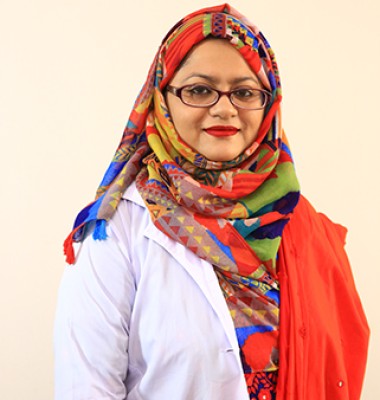
Head of the Department (HOD): Dr. Farida Arjuman
Designation: Associate
Professor
Contact email and Phone: Email: drarju35cmc@gmail.com
Phone: extension-301.
Office Location:
Room no 301, 2nd floor, Block B
National
Institute of Cancer Research & Hospital
TB Gate Road,
Mohakhali, Dhaka, Bangladesh
Working Hour: 8:00am – 2:30pm.